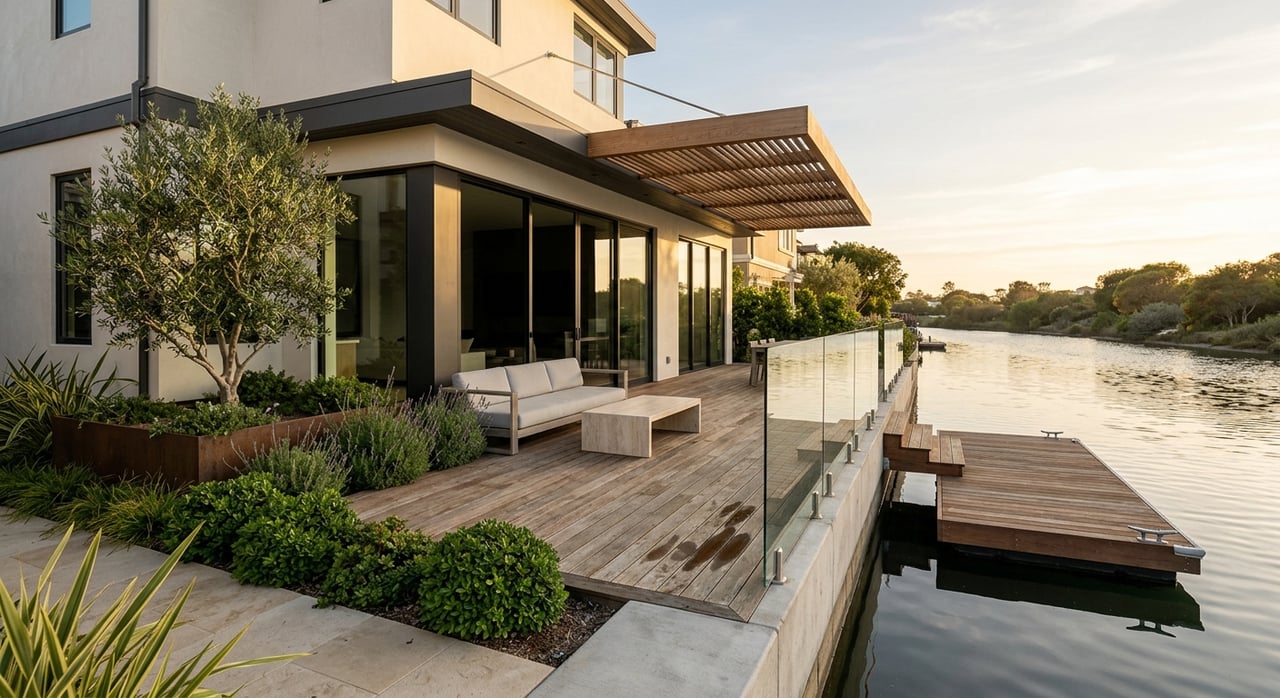
A waterfront yard in Foster City can feel like a private retreat, but it also sits within a shared lagoon system with its own rules, water-level changes, and design realities. If you are planning updates or evaluating a lagoon-front home, the best outdoor spaces do more than look beautiful. They also respect view corridors, handle seasonal lagoon conditions, and fit Foster City’s review process. Let’s dive in.
Start With Foster City’s Waterfront Reality
Foster City’s lagoon is more than an amenity. The city describes it as a drainage detention basin that collects stormwater and pumps it into the Bay, while also serving as a recreation corridor through residential neighborhoods. That means your outdoor space is part of a managed public-private waterfront setting, not an isolated shoreline.
That local context should shape every design choice. A great lagoon-front yard needs to balance scenery, privacy, durability, and water access while acknowledging how the lagoon actually functions day to day.
Design for Changing Water Levels
Lagoon water levels in Foster City are managed seasonally. The city has noted that levels rise to summer operating levels and then drop in November to prepare for winter storms. For homeowners, that means edges near the water should be planned with changing conditions in mind.
Patios, bulkheads, and dock-adjacent features should not assume a fixed water line. Materials and layouts that tolerate periodic variation tend to make more sense over time, especially for homes where the outdoor living area is meant to stay visually polished with minimal disruption.
The broader long-term picture matters too. Foster City’s Safety Element notes the city began its Levee Improvements Project in 2020 to raise protection against Bay waters. Even when your main goal is entertaining by the water, it is wise to think in terms of resilience and long-term performance.
Keep the Profile Low Near the Lagoon
On lagoon-front lots, lower-profile improvements generally work best both visually and functionally. Historical city guidance for decks and patios encouraged stepping improvements down toward the lagoon, avoiding unnecessary height near the water, and preserving adjacent water views. That guidance also favored materials and colors that fit the home.
For you, that often translates into outdoor spaces that feel calm and integrated rather than oversized or abrupt. A terraced patio, a modest deck transition, or a seating area that descends gently toward the water can help preserve openness while still creating usable outdoor rooms.
This approach also supports the refined look many Peninsula buyers appreciate. When a waterfront yard feels balanced rather than overbuilt, the view has room to lead.
Use Privacy Layers Instead of Heavy Barriers
Privacy matters on waterfront homes, but in Foster City it is not always best solved with tall walls or bulky screening. The city notes that fences, walls, and hedges are subject to many height limitations, and some waterfront fence rules are neighborhood-specific. That makes layered landscaping a more practical strategy in many cases.
Instead of trying to create one hard barrier, think in layers. Lower planting near the lagoon, selective screening near side boundaries, and carefully placed landscape elements can create separation without making the yard feel closed off.
This kind of restraint often improves the overall result. You protect privacy, maintain a lighter edge at the water, and avoid creating features that may conflict with local rules or neighboring sightlines.
Choose Landscaping That Fits Local Conditions
Waterfront landscaping in Foster City should be attractive, efficient, and easy to maintain. The city identifies the area as one with water resource scarcity and offers residential landscape water-use audits through EMID. It also notes that its Water Neutrality Ordinance may require certain projects that increase water demand to offset that demand through efficiency or retrofit measures.
That makes drought-tolerant planting and efficient irrigation a natural fit for lagoon-front homes. Thoughtful hardscape planning can help too, especially when you want outdoor entertaining space that manages runoff well and remains usable through seasonal changes.
From a design standpoint, simpler palettes often age better. Clean paving, restrained plant selections, and uncluttered borders tend to complement the lagoon setting without competing with it.
Plan Docks Carefully
In Foster City, docks are not a casual add-on. The city’s boat-dock policy allows private residential docks only through Architectural Review, with size and placement considered case by case. Docks must be independently anchored, and no part of a private dock may extend into publicly owned water.
There are also functional limits to know. If the adjacent lagoon is too shallow, written permission from Public Works is required to deepen or dredge it, otherwise the dock is not allowed. The policy also prohibits overnight docking, live-aboards, and non-nautical storage on the dock.
Because lagoon levels change seasonally, practicality matters as much as appearance. In many cases, adjustable or floating concepts may align better with the realities of a managed lagoon environment than rigid shoreline assumptions.
Remember the Lagoon Is Active
A Foster City waterfront yard may feel peaceful from your patio, but the lagoon itself is an active recreation setting. The city says the lagoon runs about five miles through neighborhoods and can get crowded in summer, with swimmers and several types of watercraft sharing the space. Gas and diesel boating are not allowed, and vessels are limited to 5 miles per hour.
This matters when you design the edge of your property. Safe water access, clear transitions, and durable finishes are often more useful than delicate features that depend on a quiet, low-traffic shoreline.
It also helps to set expectations when buying. A lagoon-front home offers a distinctive lifestyle, but it is a managed and shared water environment, not a secluded private canal.
Expect a Layered Approval Process
One of the most important parts of designing outdoor spaces for Foster City waterfront homes is understanding approvals before construction begins. The city says almost all exterior changes to residential properties require a planning permit, including fences, decks, patio covers, gazebos, windows, doors, and room additions. Building permits are separate and are required for all interior and exterior changes except purely cosmetic work.
For architectural review, the city asks for a general planning application, a building-permit acknowledgement form, an HOA approval letter if applicable, and a neighbor notification report and form. In practical terms, many waterfront projects involve both design review and neighbor-facing coordination.
The rule framework also changed recently. Foster City adopted Single-Family and Two-Family Objective Design and Development Standards in December 2025, and later applications must comply with the new Chapter 17.15 standards. At the same time, active citywide policies still include waterfront-related rules such as the Boat Docks Policy and certain neighborhood-specific fence requirements.
That is why it is risky to assume a nearby finished project can simply be repeated on your lot. In Foster City, current rules, neighborhood specifics, and site conditions all matter.
Think About Maintenance From Day One
The most successful waterfront spaces are not just beautiful on installation day. They are also manageable over time. Foster City’s lagoon management plan notes that the system can experience aquatic weed growth, algae blooms, and water-quality issues, all within a lagoon and stormwater system the city actively manages.
For homeowners, that supports a practical design mindset. Durable materials, straightforward transitions, and a visually calm layout tend to hold up better than fussy features that require constant upkeep.
If you are preparing a home for sale, this matters even more. Buyers often respond well to outdoor spaces that feel elegant and easy to own, especially when the design clearly fits the waterfront setting rather than fighting it.
What Buyers and Sellers Should Notice
If you are buying a Foster City waterfront home, pay attention to more than the view. Ask how the yard handles changing lagoon levels, whether any dock or shoreline feature was properly reviewed, and whether fences, screens, or structures appear consistent with current city rules.
If you are selling, well-considered outdoor design can strengthen the way your home presents in the market. A low-profile terrace, efficient landscaping, and a clean lagoon edge can help buyers see both lifestyle appeal and practical stewardship.
In our experience across the Peninsula, high-value buyers tend to appreciate homes where outdoor spaces feel intentional, well maintained, and locally informed. On a Foster City waterfront lot, that local fit is part of the value story.
Whether you are evaluating improvements before a sale or looking for the right lagoon-front purchase, we can help you assess how outdoor design contributes to presentation, usability, and long-term appeal. For a confidential conversation about Foster City waterfront homes, connect with Buljan Group.
FAQs
What makes Foster City waterfront outdoor design different?
- Foster City lagoon-front homes sit along a managed lagoon that functions as both a stormwater system and a recreation corridor, so design choices need to account for water-level changes, shared water use, and local review rules.
Do outdoor renovations on Foster City waterfront homes require permits?
- In many cases, yes. The city says almost all exterior residential changes require a planning permit, and building permits are separately required for most interior and exterior work other than purely cosmetic updates.
Can you add a private dock to a Foster City lagoon-front home?
- Possibly, but it requires Architectural Review and is evaluated case by case under the city’s boat-dock policy, including rules about anchoring, placement, and water depth.
How should you create privacy in a Foster City waterfront yard?
- Layered landscaping and carefully placed screening often work better than tall barriers because city and neighborhood-specific rules can limit fence, wall, and hedge heights.
What landscaping works best for Foster City waterfront homes?
- Drought-tolerant planting, efficient irrigation, and simple, durable hardscape often fit best because Foster City highlights water scarcity, water-use efficiency, and practical long-term maintenance.
Should buyers compare a waterfront home to a neighbor’s finished yard?
- Not without verifying current rules. Foster City’s standards and waterfront policies can vary by timing, neighborhood, and project type, so a nearby completed improvement may not reflect what is currently allowed.