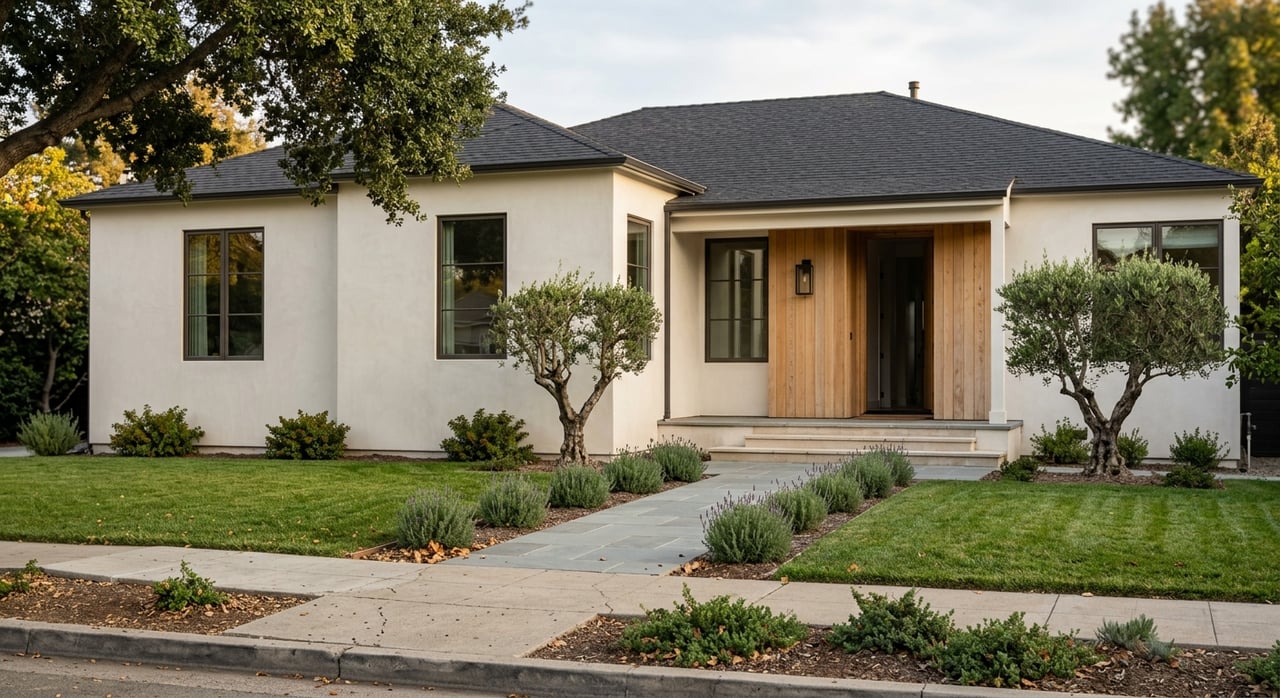
Trying to make sense of Burlingame by neighborhood can feel harder than it should. Two homes may be only minutes apart, yet one feels tied to Broadway, another to Burlingame Avenue, and another to a quieter residential pocket with a very different street pattern. If you are weighing where to focus your search, this guide will help you understand how Burlingame is organized, what key neighborhoods tend to feel like, and which practical details matter most before you make a move. Let’s dive in.
How Burlingame is organized
Burlingame still reads like the rail town it started as. The city grew around its station areas, and that pattern remains visible today in the Burlingame Station corridor, the Broadway corridor, and the residential neighborhoods between them.
That is also why locals often describe location in relation to shopping districts rather than just city limits. In everyday conversation, you will hear homes framed as being closer to the Avenue or closer to Broadway, because those districts shape how people experience daily life in town.
Burlingame is also largely built out. According to the city, most new housing now comes from teardowns, additions, or occasional lot splits rather than new large-scale subdivision, which helps explain why block character can stay consistent even as individual homes change over time.
Why neighborhood feel matters
In Burlingame, neighborhood feel is not just about architecture. It often reflects the age of the subdivision, the street grid, access to transit, and how close you are to retail corridors, parks, or major roads.
The city’s residential review process reinforces that pattern. New homes and many additions are reviewed with attention to setbacks, massing, garage placement, and existing neighborhood rhythm, so changes are often shaped by what already exists on the block.
For you as a buyer, that means a home’s setting can be just as important as square footage. A classic lot in an early neighborhood may live very differently from a compact parcel in a later subdivision, even when both properties are in Burlingame.
Easton Addition at a glance
Easton Addition is one of Burlingame’s defining early neighborhoods. It began as the former Town of Easton and was annexed in 1910, and the city places it roughly between California Drive and El Camino Real, and from Sanchez Creek to Broadway.
This is often the neighborhood buyers picture when they think of classic Burlingame. You will find mature trees, a gridded street pattern, and a mix of older bungalows, Victorians, Craftsman homes, Arts and Crafts cottages, and newer custom residences.
What makes Easton Addition especially appealing is its balance. It offers historic character, close access to Broadway’s shops and restaurants, and reasonable access to Burlingame Avenue, while the city’s commuter shuttle system also includes Easton Addition on the Millbrae-Burlingame route.
If you want a neighborhood that feels established and connected, Easton Addition is often one of the clearest starting points. It tends to suit buyers who value older housing fabric without giving up convenience.
Burlingame Park at a glance
Burlingame Park is another of the city’s earliest neighborhoods and one of its best-known residential areas. City planning materials group it with Easton Addition as part of Burlingame’s earliest development pattern, and that early history still shows in its tree-lined streets.
Neighborhood guides describe Burlingame Park as a place with spacious traditional homes, many thoughtful rebuilds, and strong proximity to Burlingame Avenue. It is often the neighborhood most associated with the pairing of historic residential character and downtown convenience.
In practical terms, Burlingame Park often feels a little more spacious and polished than some of the city’s other central areas. If your goal is to be near the Avenue while still enjoying a distinctly residential setting, this neighborhood usually stays high on the list.
Burlingame Gardens at a glance
Burlingame Gardens tells a slightly different story. The city’s historic resources report traces the subdivision to 1936, with 103 lots and early streets including Toyon Drive, Larkspur Drive, Ross Road, and Azalea Avenue.
Its setting was shaped in part by Bayshore Highway and nearby light-industrial land, which helps explain why the neighborhood can feel more edge-oriented and practical than Burlingame Park or the core of Easton Addition. The streets are still residential and tree-lined, but the layout tends to read as more compact and less showpiece-driven.
For some buyers, that is exactly the appeal. Burlingame Gardens can offer a strong residential feel with a more modest streetscape and a transition-era character that sits between old Burlingame charm and later planning patterns.
Oak Grove Manor and Burlingables
Oak Grove Manor and Burlingables sit in the east-central part of Burlingame near Burlingame Avenue. Neighborhood guides describe walkable access to shops and restaurants, proximity to Downtown Burlingame Caltrain, and closeness to Washington Park.
The housing mix here is varied. You may see Cape Cod, Spanish, Colonial, Dutch Colonial, Tudor, Traditional, and Contemporary styles, usually on more compact lots than you would find in estate-style settings elsewhere on the Peninsula.
City documents add another layer of context that can be useful during a home search. The city has identified Oak Grove Manor in storm-drain and traffic-calming projects, and it also notes that the rail line near Carolyn Avenue can affect access to amenities in other parts of the city.
That means this area can reward a more block-by-block evaluation. If you are considering Oak Grove Manor or Burlingables, it is smart to look beyond style and price and also pay attention to drainage, traffic flow, and the exact path to nearby amenities.
Other neighborhoods buyers compare
A few other Burlingame neighborhoods often come up during the search process. Ray Park is commonly seen as a postwar or newer-construction comparison point, while Burlingame Terrace is associated with a denser residential pattern, including areas near the Rollins Road corridor and Highway 101.
Burlingame Grove is another pocket buyers may notice for its narrower streets, early-20th-century homes, eclectic architecture, and mature tree cover. These areas are useful reference points because they help place the rest of Burlingame on a spectrum.
A simple shorthand is this: Easton Addition and Burlingame Park often represent the most classic historic character, while Burlingame Gardens and Oak Grove Manor tend to feel more compact and practical. Areas near Burlingame Terrace and the 101 edge usually reflect a denser condo and apartment pattern.
The Avenue vs. Broadway
One of the most useful ways to understand Burlingame is to think in terms of Burlingame Avenue versus Broadway. These are distinct shopping and activity districts, and they shape the feel of nearby neighborhoods.
If a home is near Burlingame Avenue, you may be looking at a more downtown-centered routine with quick access to retail, dining, and the station area. If a home is near Broadway, the rhythm can feel a bit different, with its own shops, restaurants, and neighborhood identity.
Neither is automatically better. The right fit depends on how you want your day-to-day life to work, including where you commute, where you like to walk, and whether you prefer one district’s setting over the other.
Schools require address-level verification
If schools are part of your planning, the most important takeaway is simple: assignments are address-specific. Burlingame School District operates six TK-5 elementary schools plus Burlingame Intermediate, and the district instructs families to use its boundary map to identify the homeschool.
At the high school level, Burlingame High School is part of the San Mateo Union High School District, which the school describes as an open-enrollment district serving students from the district boundary area. In practice, neighborhood shorthand can be helpful, but it is not a substitute for checking the exact address.
Public neighborhood guides most often associate Easton Addition with Roosevelt or Lincoln and Oak Grove Manor with Washington, while Burlingame Park and Burlingame Gardens are better treated as verify-by-address neighborhoods for elementary placement. If this detail matters to your search, confirm it early.
Transit and commuting in Burlingame
Transit is a major part of Burlingame’s appeal. Caltrain places both Burlingame and Broadway in Zone 2, and the city’s shuttle system includes Easton Addition on the Millbrae-Burlingame commuter route.
For many buyers, that combination is what makes Burlingame so readable. You can narrow your search not just by house style or price point, but also by how directly a neighborhood connects to rail, shuttle service, and nearby commercial districts.
If you expect to commute regularly, this lens can be more useful than a broad citywide search. A home’s exact relationship to a station, shuttle route, or neighborhood corridor may shape your daily experience more than the listing description suggests.
How to evaluate neighborhoods well
When you tour Burlingame, it helps to ask a few practical questions before deciding one neighborhood is the right fit.
- Is the home closer to Burlingame Avenue or Broadway?
- Does the block feel historic, rebuilt, compact, or more transit-oriented?
- Is the parcel in an address-specific school boundary that you need to verify?
- Are there nearby infrastructure factors such as traffic patterns, rail adjacency, or drainage projects?
- Does the lot reflect the older flat-core feel common in early Burlingame subdivisions, or a later subdivision pattern?
These questions usually tell you more than a neighborhood name alone. In a city as established as Burlingame, small location differences can shape everyday convenience in a big way.
Burlingame in Peninsula context
It can also help to place Burlingame in the broader Peninsula picture. Official materials describe Hillsborough as a residential community with no commercial zoning or business district, which makes it a very different choice for buyers seeking estate-scale privacy and a quieter street pattern.
San Mateo offers the opposite comparison. Its downtown functions as a larger urban core with Caltrain access in the center, making it a denser and more city-like environment than Burlingame’s smaller two-downtown pattern.
That leaves Burlingame in a compelling middle position. It offers more neighborhood-scale retail access and transit legibility than Hillsborough, while often feeling more intimate and residential than San Mateo.
If you are considering a move in Burlingame and want help comparing Easton Addition, Burlingame Park, Burlingame Gardens, or the neighborhoods around the Avenue and Broadway, Buljan Group offers discreet, locally informed guidance shaped by decades of Peninsula experience.
FAQs
What is Easton Addition in Burlingame known for?
- Easton Addition is known for early Burlingame character, a central gridded layout, mature trees, and a mix of vintage homes and newer custom residences, along with convenient access to Broadway and transit.
What is the difference between Burlingame Park and Easton Addition?
- Burlingame Park is often associated more closely with Burlingame Avenue and a spacious, polished residential setting, while Easton Addition is known for its historic mix of homes and strong connection to Broadway and commuter access.
What does Burlingame Gardens feel like compared with central Burlingame neighborhoods?
- Burlingame Gardens generally feels more compact, practical, and edge-oriented than Burlingame Park or the core of Easton Addition, though it remains a strongly residential neighborhood.
What should buyers know about Oak Grove Manor in Burlingame?
- Oak Grove Manor offers convenience near Burlingame Avenue, Downtown Burlingame Caltrain, and Washington Park, but buyers should also consider block-specific factors such as rail adjacency, drainage, and traffic-calming improvements.
How do school boundaries work in Burlingame neighborhoods?
- Burlingame school assignments are address-specific, so you should use the Burlingame School District boundary map to confirm the exact elementary school for any property you are considering.
Is Burlingame better near Broadway or Burlingame Avenue?
- The better fit depends on your routine, since Broadway and Burlingame Avenue are distinct districts with different daily patterns, and your preference may come down to commute, walkability, and neighborhood feel.