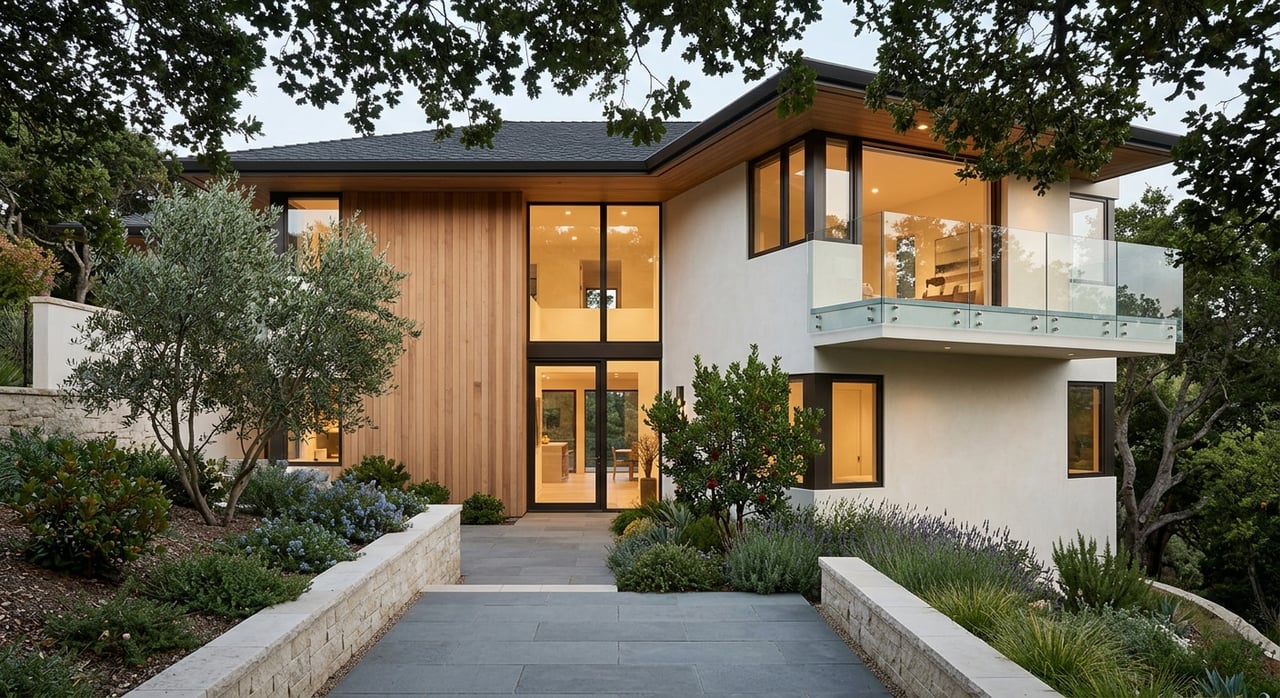
Are you looking for Peninsula views, more breathing room, and quick access to the rest of the Bay Area without stretching into the very top tier of local pricing? Belmont often enters that conversation for good reason. If you are weighing hilltop living here, this guide will help you understand what makes these homes distinct, what trade-offs to expect, and why Belmont continues to draw buyers who want setting as much as square footage. Let’s dive in.
Why Belmont’s hilltops stand out
Belmont is known for wooded hills, Bay views, and open space, all within a central San Francisco Peninsula location about halfway between San Francisco and San Jose. The city also highlights access to Highway 101, Highway 82, Interstate 280, and Caltrain, which helps explain why Belmont remains practical for many Peninsula buyers.
What makes the hilltop segment especially notable is simple supply and demand. The city states that most neighborhoods are on the hillsides and that Belmont is nearing build-out, with only small vacant residential lots remaining in hillside neighborhoods. For you as a buyer, that means hilltop inventory is naturally constrained, especially when a home combines privacy, views, and usable outdoor space.
What hilltop living feels like
Hilltop living in Belmont is often less about a single look and more about a pattern of daily life. You are buying into elevation, topography, and separation from the busier commercial spine below. In many cases, that creates a stronger sense of outlook, more visual openness, and a closer relationship to trails and open space.
At the same time, hillside living comes with practical considerations. Streets can be winding, lots may be irregular, and not every property will offer the same balance of views, yard utility, and access. The right fit often comes down to how you prioritize setting, privacy, home size, and ease of everyday movement.
Key Belmont hilltop neighborhoods
Hallmark
In the city’s general-plan environmental review, Hallmark is described as a high-elevation residential neighborhood. Larger two-story homes, deep front setbacks, and sophisticated landscaping are common in its southern portion. If you are drawn to a more elevated residential setting with a composed neighborhood feel, Hallmark is often part of the conversation.
Hallmark also stands out for outdoor access. The back of Hallmark Park connects to the Crystal Springs Cross Country Course, which offers a one-mile loop or a three-mile course with overlooks of Crystal Springs Reservoir, the Bay, and the San Francisco skyline.
Western Hills
Western Hills is described by the city as the area with the most hills, and much of its land remains undeveloped open space. For buyers, that can translate to a stronger sense of natural surroundings and a more topographically defined setting.
If your ideal home search starts with terrain, outlook, and proximity to preserved land, Western Hills may deserve a close look. The appeal here is often tied to the landscape itself as much as to any single house.
Chula Vista
Chula Vista is characterized by larger lots, homes that are more spread out, and local views from hillsides and ridgelines. That spacing can be meaningful if you value a setting where homes feel less compressed.
For some buyers, Chula Vista offers the kind of lot pattern that supports privacy and a stronger connection to the land. In a market where many decisions come down to site quality, that can be a major advantage.
Sunnyslope
Sunnyslope includes some of Belmont’s oldest single-family houses and is noted for village-like streetscapes. If you appreciate neighborhood character and an older residential fabric, Sunnyslope may offer a different kind of hilltop appeal.
This is a reminder that Belmont’s hillside market is not one-note. Some buyers are looking for scale and outlook, while others respond more to the texture and rhythm of an established residential area.
Why outdoor access matters here
One of Belmont’s strongest advantages is the amount of recreation close to home. The city reports 14 developed parks on 31 acres, along with 337 acres of open space for hiking, running, and bike riding. That is a meaningful part of the value story for hilltop buyers.
Waterdog Lake & Open Space is a major draw, with trailheads at Hallmark & Lake Road, 2400 Lyall Way near Lake Road, and 2642 Carlmont Drive. Depending on where you buy, access to trails may become part of your daily routine rather than a weekend plan.
For many Peninsula buyers, this is what sets Belmont apart. You can prioritize views and residential calm while still staying connected to outdoor movement, whether that means morning trail runs, weekend hikes, or simply having open space nearby.
Commute and convenience trade-offs
Belmont’s location supports regional access, but hilltop living usually involves a different daily rhythm than living close to the transit corridor. The Belmont Caltrain Station is at 995 El Camino Real and includes wheelchair access, an elevator, 18 bike racks, BikeLink lockers, 375 parking spaces, and SamTrans connections.
Downtown Belmont has been identified by the city as a Priority Development Area due to its proximity to transit, jobs, shopping, and services. Ralston Avenue also serves as a major east-west arterial from State Route 92 to U.S. Highway 101.
For many homes west of El Camino Real, everyday access often means driving or biking down toward the station, shopping, or key routes rather than walking directly to them. That is not necessarily a drawback, but it is a lifestyle distinction worth understanding before you buy.
Belmont’s value within the Peninsula
Belmont sits in premium company on the Peninsula, but the market data suggests it can offer a compelling relative position. In April 2026, MLSListings reported a single-family median sale price of $2,350,000 in Belmont, with a median 8 days on market, 1.9 months of inventory, and a 106% sale-to-list ratio.
Nearby comparisons from the same source put single-family medians at $2,625,000 in San Carlos, $2,400,000 in San Mateo, $3,192,500 in Burlingame, and $4,500,000 in Hillsborough. San Mateo County overall was $2,150,000.
On a price-per-square-foot basis, Belmont was reported at $1,366, compared with $1,591 in San Carlos, $1,566 in Burlingame, and $1,634 in Hillsborough. Belmont was close to San Mateo at $1,353 per square foot. For you, that may mean access to a view-driven, supply-constrained hillside market that still prices below some of the Peninsula’s most expensive enclaves.
What to evaluate before you buy
A hilltop home can be deeply rewarding, but the best purchase usually comes from looking beyond the photos. In Belmont, site characteristics often shape long-term enjoyment just as much as finishes or room count.
As you compare properties, focus on:
- View orientation and how much of the outlook is preserved
- Lot usability for outdoor living, parking, and circulation
- Privacy relative to neighboring homes and street positioning
- Ease of access to main roads, downtown, and Caltrain
- Proximity to parks, trailheads, and open space
- The balance between house size, setting, and maintenance needs
These factors matter because many Belmont homes are older, even if generally well maintained. In hillside neighborhoods, the combination of lot pattern, elevation, and surrounding open space often drives the lifestyle value.
A thoughtful approach for Peninsula buyers
If you are searching for a Peninsula home with views, privacy, and a more topographically distinct setting, Belmont deserves serious attention. Its hilltop neighborhoods offer a blend of natural beauty, established residential character, and everyday regional access that can be hard to replicate.
The key is knowing how to separate a home that merely sits on a hill from one that truly benefits from its site. That takes local knowledge, careful evaluation, and a clear sense of how you want to live day to day.
For buyers considering Belmont and the surrounding Peninsula, we bring a long view of neighborhood character, property positioning, and the nuances that matter in higher-value home searches. When the right opportunity is not obvious online, discreet introductions and targeted outreach can also make a difference. If you are ready to explore Belmont hilltop living with a measured, local perspective, Buljan Group is here to help.
FAQs
What makes Belmont hilltop homes appealing for Peninsula buyers?
- Belmont hilltop homes often appeal because they combine wooded hills, Bay views, open space access, and a central Peninsula location with access to Highway 101, Highway 82, Interstate 280, and Caltrain.
Which Belmont neighborhoods are commonly associated with hilltop living?
- Hilltop living in Belmont is often associated with Hallmark, Western Hills, Chula Vista, and Sunnyslope, all of which the city identifies as hillside neighborhoods west of El Camino Real.
How competitive is the Belmont single-family market?
- MLSListings reported that Belmont’s April 2026 single-family market had a median sale price of $2,350,000, median 8 days on market, 1.9 months of inventory, and a 106% sale-to-list ratio.
Does Belmont offer trail and park access near hillside neighborhoods?
- Yes. The city reports 14 developed parks on 31 acres and 337 acres of open space, including Waterdog Lake & Open Space and the Crystal Springs Cross Country Course near Hallmark Park.
How does Belmont compare with nearby Peninsula markets on price?
- Based on the April 2026 MLSListings snapshot, Belmont’s single-family median sale price was below San Carlos, Burlingame, and Hillsborough, while its price per square foot was below San Carlos, Burlingame, and Hillsborough and close to San Mateo.