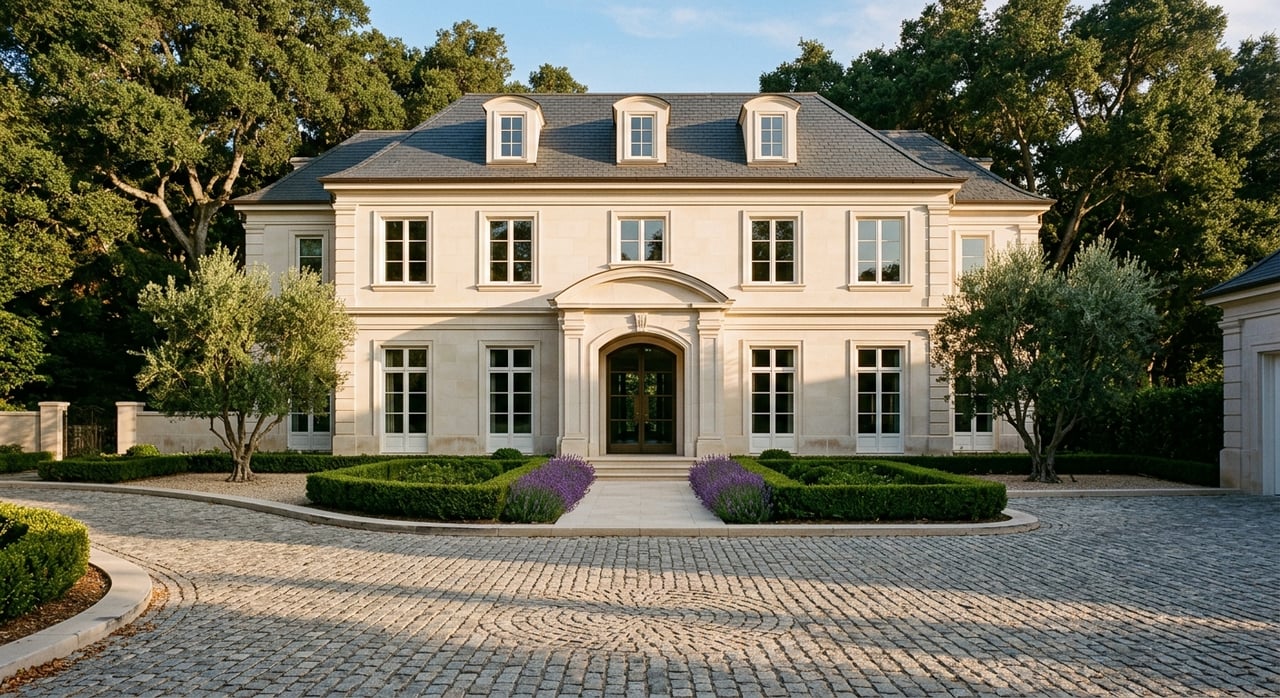
If you drive through Hillsborough and feel like no two estates tell the same story, you are seeing the town exactly as it was shaped to be. Hillsborough is not defined by a single look. Instead, its identity comes from layered estate history, varied architectural styles, and the way homes sit within curving roads, mature trees, and carefully composed grounds. If you are buying, selling, or simply studying the market, understanding those patterns can help you read a property more clearly. Let’s dive in.
Why Hillsborough Architecture Feels Distinct
Hillsborough developed as an estate landscape first. According to the town’s history, large estate parcels defined its early character, and many of those properties were later subdivided after incorporation in 1910 while often keeping the original house and several acres intact. That history still shapes how the town looks and feels today.
Just as important, Hillsborough treats setting as part of architecture. The town’s Residential Design Guidelines highlight curving roads, abundant landscaping, and diverse home styles as central parts of local character. They also emphasize that topography and tree cover are not background features. They are part of the composition.
That matters when you look at an estate here. In Hillsborough, a home’s design is tied to the lot, the slope, the trees, the approach from the street, and the surrounding context. Style and setting work together.
The Estate-Era Foundation
To understand Hillsborough estates, you have to start with land patterns. The town notes that major estate properties such as Uplands, Home Place, and La Dolphine were eventually subdivided, but many retained the original residence and substantial grounds. Even as parcel sizes changed, the estate framework stayed visible.
That legacy still influences how buyers and sellers think about value. In Hillsborough, size alone does not tell the full story. The relationship between the house, the landscape, and the original estate character often carries equal weight.
The town’s minimum lot size was changed to one-half acre in 1953 and remains in effect. That rule helps preserve the spacious, estate-oriented rhythm that continues to define much of the community.
Beaux-Arts and French Classical Landmarks
When people picture grand Hillsborough estates, Beaux-Arts and French Classical architecture often come to mind first. These styles express symmetry, formality, and a strong sense of arrival. They are some of the clearest architectural touchstones in town.
Carolands is the standout example. The Town of Hillsborough describes it as a French Classical work from the 1915 era, designed by French architect Ernest Sanson, with Willis Polk supervising construction and Achilles Duchene designing the gardens. It remains one of the strongest examples of this tradition in the local landscape.
The Newhall Estate, also known as La Dolphine, offers another key reference point. The California Office of Historic Preservation describes it as a 1912 Beaux Arts Classical residence set within a formal garden, with French influences in both the house and landscape. That pairing of architecture and grounds is especially important in Hillsborough.
When you tour homes influenced by this tradition, look for a few recurring traits:
- Formal symmetry
- Monumental scale
- Classical detailing
- Strong axial layouts
- A house and garden designed as one estate ensemble
For sellers, this style often carries a sense of provenance that deserves careful presentation. For buyers, it helps explain why certain legacy properties feel significant even before you step inside.
Tudor Revival in Hillsborough
Tudor Revival adds a different kind of estate character. Where French Classical homes often feel formal and ceremonial, Tudor homes tend to feel picturesque and richly textured. In Hillsborough, that romantic quality fits naturally within winding streets and mature landscaping.
The town’s guidelines treat revival styles as core local references and stress that a style should read consistently across the whole design. For Tudor homes, that means roof form, façade composition, arches, and detailing all need to work together.
A National Park Service nomination describes Tudor Revival as asymmetrical and picturesque, with steep roofs, cross gables, half-timbering, tall narrow windows, and massive chimneys. Those features are often the easiest clues to spot from the street.
Tudor features to notice
If you are evaluating a Tudor-influenced estate, pay attention to:
- Steeply pitched rooflines
- Cross gables
- Half-timber detailing
- Tall, narrow windows
- Prominent chimneys
In Hillsborough, these homes often gain much of their visual impact from how they sit in the landscape. Trees, setbacks, and elevation changes can make the architecture feel even more layered and private.
Mediterranean and Spanish Revival Homes
Mediterranean and Spanish Revival homes form another major part of Hillsborough’s architectural vocabulary. These homes often balance elegance with a more relaxed indoor-outdoor character, which suits the Peninsula climate and estate setting.
The National Park Service describes Mediterranean Revival as drawing from Italian Renaissance precedents, often marked by stucco exteriors, flat roofs, and decorative horizontal friezes. In practice, the broader Mediterranean family can also overlap with Spanish Revival, Mission Revival, Beaux Arts influences, and Italian Renaissance Revival.
That overlap is part of what makes Hillsborough interesting. A home may not fit neatly into a single label, but still belong clearly to this broader historic tradition. In a 2025 ADRB item, the existing house at 1033 Jackling Drive was described as Spanish Revival, showing that this vocabulary remains active in Hillsborough’s design review environment.
Common Mediterranean cues
You will often see:
- Stucco walls
- Flat or low-pitched roofs
- Arches
- Formal but open indoor-outdoor flow
- Details influenced by Spanish or Italian precedents
For buyers, these homes can offer a softer and more sun-oriented estate expression. For sellers, their appeal often lies in the balance of architectural presence and livability.
Contemporary Design, Hillsborough Style
Hillsborough does include notable modern architecture, but the town’s guidelines say modern work is not the predominant style and is often reviewed more closely. That does not mean contemporary homes do not belong here. It means they are judged carefully for fit.
The local review process places strong emphasis on massing, scale, topography, and neighborhood context. New homes require preliminary review, and applicants are expected to discuss projects with surrounding neighbors within a 500-foot radius before review. That process reflects how seriously Hillsborough takes design compatibility.
In practical terms, contemporary Hillsborough homes often succeed when they respond to the site rather than overpower it. Cleaner lines and larger openings may be part of the design, but they are typically moderated by hillside siting, mature trees, and estate-scale planning.
What makes modern homes work here
The strongest contemporary reimaginings tend to respect:
- Natural contours of the lot
- Existing tree cover
- Neighborhood scale
- Privacy relationships
- The visual rhythm of the street
A useful example is the Carolands Gatehouse reconstruction completed in 2010. The town states that the project preserved architectural integrity, reused saved roof tiles and ornaments, and maintained the historic relationship to nearby estate structures while adapting the building for modern civic use. It shows that change in Hillsborough works best when continuity is part of the plan.
Setting Matters as Much as Style
One of the biggest mistakes people make is focusing only on the façade. In Hillsborough, the town’s own guidelines make clear that architecture cannot be separated from topography, landscaping, and street context. Buildings are expected to conform to natural contours rather than flatten the site with oversized pads or terraces.
That principle affects how homes are designed, reviewed, and valued. A house that fits the land well can feel more timeless than one that is larger but less responsive to its setting. In an estate market like Hillsborough, that distinction matters.
This is also why neighborhood context is so important. In 2008 ADRB minutes involving Country Club Drive, residents and the board discussed whether a two-story proposal would be compatible with an area described as a small one-story community on flat terrain. The discussion shows that local character is evaluated at the street level, not just lot by lot.
How to Read a Hillsborough Estate
If you are touring homes in Hillsborough, it helps to look beyond finish materials and square footage. Try reading the property as a complete composition.
Ask yourself:
- How does the house sit on the land?
- Are the trees and landscaping part of the architecture?
- Does the style feel consistent from roofline to façade details?
- How does the home relate to the street and neighboring parcels?
- Does the property preserve an estate feeling, even if the original parcel was subdivided?
Those questions can help you understand why one home feels more authentic, more graceful, or more enduring than another. In Hillsborough, architecture is rarely just about the structure alone.
Why This Matters for Buyers and Sellers
For buyers, architectural literacy can sharpen your decision-making. It helps you identify what gives a home staying power in Hillsborough, whether that is formal classical composition, Tudor character, Mediterranean ease, or a well-sited contemporary design.
For sellers, understanding a home’s architectural language can shape how it is presented to the market. Legacy properties and architecturally significant homes often benefit from thoughtful positioning, especially when their value lies in provenance, setting, and design integrity as much as amenities.
That is where local experience matters. In a market like Hillsborough, the story of a property is often inseparable from the story of the land, the architecture, and the town’s design standards.
If you are considering buying or selling an estate in Hillsborough, we can help you evaluate architectural character, market positioning, and discreet opportunities with the care these properties deserve. To schedule a confidential consultation, connect with Buljan Group.
FAQs
What architectural styles define Hillsborough estates?
- Hillsborough estates are often associated with Beaux-Arts, French Classical, Tudor Revival, Mediterranean or Spanish Revival, and select contemporary homes shaped by local design review and estate-style siting.
Why is landscape so important in Hillsborough architecture?
- Hillsborough’s guidelines state that topography and tree cover contribute greatly to the town’s character, so landscape and natural contours are treated as part of the architectural composition.
What makes a Tudor Revival home in Hillsborough easy to recognize?
- Common Tudor Revival features include steep roofs, cross gables, half-timbering, tall narrow windows, and prominent chimneys.
How does Hillsborough review new estate design?
- The town’s ADRB reviews most new houses, additions, landscape plans, fences, and gates, with attention to massing, scale, neighborhood context, and how a design fits the site.
Are contemporary homes common in Hillsborough?
- Hillsborough has notable examples of modern architecture, but the town says it is not the predominant style, and contemporary work is generally reviewed closely for compatibility with setting and neighborhood character.
Why do older Hillsborough estates still feel cohesive after subdivision?
- Many historic estate parcels were subdivided over time while retaining the original house and substantial grounds, which helped preserve the estate character that still shapes Hillsborough today.